How Does an Air Compressor Work?
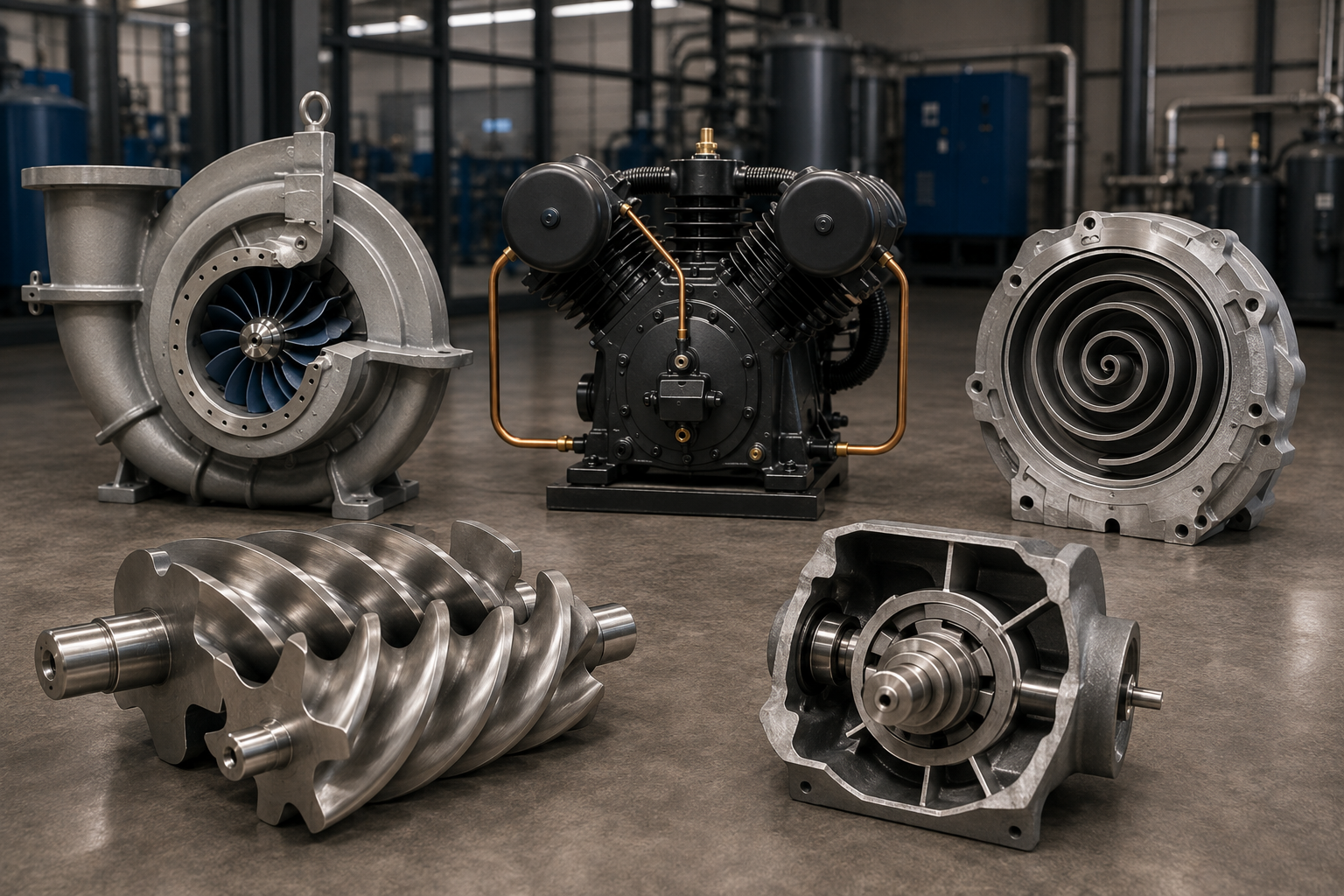
A complete guide to how air compressors create compressed air for industry.
Walk through almost any manufacturing plant, automotive shop, food processing facility, or construction site, and you'll find one piece of equipment quietly powering countless operations: the air compressor.
Compressed air drives impact wrenches, operates automated machinery, controls valves, powers pneumatic tools, sprays paint, packages food, assists in pharmaceutical manufacturing, and even helps keep some of the world's largest roller coasters operating safely. In fact, compressed air is so important to modern industry that it's often referred to as the fourth utility, alongside electricity, water, and natural gas.
But how does an air compressor actually work? How do we take the same air we breathe every day and turn it into a powerful source of usable energy?
The answer is surprisingly simple, but the science behind it is fascinating.
What Is Compressed Air?
The air around us might seem empty, but it's anything but.
Every breath you take contains a mixture of gases made up of approximately:
- 78% nitrogen
- 21% oxygen
- About 1% argon, carbon dioxide, water vapor, and other trace gases
Although these gases are invisible, their molecules are constantly moving and colliding with each other. At normal atmospheric pressure, those molecules have plenty of room to spread out.
An air compressor changes that.
Instead of creating air, a compressor simply squeezes those same molecules into a much smaller space. Packing more air into less volume increases pressure, storing energy that can later be released to perform work.
Think of it like compressing a spring. As you push the spring tighter, you're storing potential energy. When you let go, that stored energy is released. Compressed air works in much the same way.
The Science Behind Compression
One of the basic principles of physics that makes air compressors possible is Boyle's Law.
Boyle's Law states that when the volume of a gas decreases, its pressure increases, assuming the temperature remains relatively constant.
Imagine filling a room with one thousand ping pong balls. If you suddenly cut the room in half, the number of balls doesn't change. They're simply packed much closer together.
Air molecules behave similarly.
As an air compressor reduces the space available inside its compression chamber, the air molecules become increasingly crowded. The pressure rises because the molecules collide with each other and the walls of the chamber more frequently.
That pressure is what stores usable energy.
How an Air Compressor Creates Usable Energy
The compression process happens in several steps.
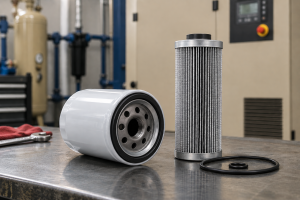
First, the compressor draws in atmospheric air through an intake filter. This filter removes dust, dirt, pollen, and other airborne contaminants before they can enter the system.
Next, the air enters the compression chamber, where mechanical components reduce its volume and increase its pressure.
As the pressure rises, the compressed air becomes significantly hotter. This is a natural result of compression because the air molecules collide much more frequently in the smaller space.
The hot compressed air then passes through an aftercooler, where much of that heat is removed before the air continues into the storage tank or receiver.
From there, the compressed air may pass through dryers and additional filtration before traveling through the facility's piping system to power equipment wherever it's needed.
When an operator pulls the trigger on an impact wrench or a production machine opens a pneumatic valve, the stored pressure is released. The compressed air rapidly expands toward lower pressure, creating the force needed to perform work.
The compressor isn't generating energy as much as it's storing it until the moment it's needed.
Why Does Compressing Air Make It Hot?
Have you ever noticed a bicycle pump getting warm after inflating a tire?
The same thing happens inside an industrial air compressor.
As air molecules are forced closer together, they collide more often. Those collisions increase the internal energy of the gas, which causes the temperature to rise.
That's why industrial compressors include cooling systems designed to remove heat before the compressed air enters the distribution system.
This heat also explains why moisture forms inside compressed air systems. Warm compressed air can hold more water vapor than cool air. As the air cools, that moisture condenses into liquid water.
If you've ever wondered why water appears in compressed air systems, be sure to read our guide, Why Is My Air Compressor Producing Water?
How Rotary Screw Air Compressors Work
While there are several types of air compressors, rotary screw compressors are among the most common in industrial applications.
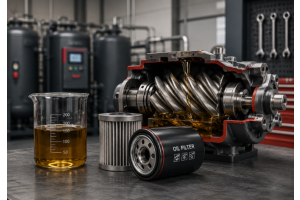
Instead of using pistons, rotary screw compressors rely on two precision-machined helical rotors that turn together inside a housing.
As the rotors spin, they trap pockets of incoming air between the rotors and the housing. Those pockets become progressively smaller as the air moves through the compressor.
Less space means higher pressure.
The compressed air then exits the compressor and continues through cooling, separation, and filtration before entering the plant's air system.
Because rotary screw compressors provide continuous airflow, operate efficiently, and require relatively little maintenance, they're the preferred choice for many manufacturing facilities.
Other Common Types of Air Compressors
Rotary screw compressors are common in industrial settings, but they are not the only way to compress air. Different applications require different compressor designs depending on pressure, airflow, efficiency, duty cycle, maintenance requirements, and air quality needs.
Reciprocating Air Compressors
Reciprocating compressors, also called piston compressors, use one or more pistons moving inside cylinders to compress air.
As the piston moves downward, air is drawn into the cylinder through an intake valve. As the piston moves upward, the air is squeezed into a smaller space, increasing its pressure before being discharged into a tank or air system.
This is one of the oldest and most familiar compressor designs. Many small shop compressors, service truck compressors, and maintenance compressors use a reciprocating design because they are relatively simple, durable, and capable of producing high pressure.
Reciprocating compressors are often a good fit for intermittent use, where compressed air is needed in bursts rather than continuously. However, because they create air in pulses instead of a continuous stream, they are usually not the first choice for large facilities with constant compressed air demand.
Centrifugal Air Compressors
Centrifugal compressors use high-speed rotating impellers to accelerate air outward. As the air moves through the compressor, that velocity is converted into pressure.
Unlike piston or screw compressors, centrifugal compressors do not physically trap and squeeze air in a smaller chamber. Instead, they use dynamic compression, which means pressure is created by rapidly increasing the speed of the air and then slowing it down in a controlled way.
Centrifugal compressors are commonly used in large industrial facilities that need very high volumes of compressed air. They are often found in power plants, petrochemical facilities, steel mills, refineries, and large manufacturing plants where continuous airflow is critical.
Because they are designed for large air volumes, centrifugal compressors are usually not used for small shops or light-duty applications. They are best suited for facilities with steady, high-demand compressed air requirements.
Scroll Air Compressors
Scroll compressors use two spiral-shaped scrolls to compress air. One scroll remains stationary while the other moves in an orbiting motion.
As the moving scroll orbits, pockets of air are trapped between the spirals and gradually pushed toward the center. As those pockets become smaller, the air pressure increases.
Scroll compressors are known for smooth, quiet operation because they have fewer moving parts and do not rely on pistons moving back and forth. They are often used in laboratories, medical facilities, dental offices, electronics manufacturing, and other applications where clean, quiet, reliable compressed air is important.
Many scroll compressors are oil-free, which makes them especially useful in environments where air quality matters. They are typically used for lower to moderate airflow needs rather than heavy industrial demand.
Rotary Vane Air Compressors
Rotary vane compressors use a rotor mounted inside a cylindrical housing. Slots in the rotor hold sliding vanes that move in and out as the rotor turns.
Because the rotor is positioned slightly off-center, the spaces between the vanes change size during rotation. Air enters the compressor when the space between the vanes is larger. As the rotor turns, that space becomes smaller, compressing the air before it exits the discharge port.
Rotary vane compressors are valued for their compact design, steady airflow, and relatively smooth operation. They are used in workshops, packaging equipment, automotive applications, printing, vacuum systems, and light to medium industrial environments.
They are generally simpler than some other compressor types and can provide reliable performance when properly maintained. Like all compressors, they depend on clean intake air, proper lubrication, and regular service to operate efficiently.
Choosing the Right Compressor Type
There is no single compressor design that's best for every application.
A small repair shop may only need a reciprocating compressor for occasional tool use. A medical laboratory may choose an oil-free scroll compressor for quiet, clean air. A large manufacturing plant may rely on rotary screw compressors for continuous production. A refinery or power plant may require a centrifugal compressor capable of delivering massive volumes of air.
The right choice depends on how the compressed air will be used, how much airflow is required, how often the compressor will run, and how clean and dry the air needs to be.
No matter which compressor type is used, the goal is the same: take atmospheric air, increase its pressure, store that energy, and deliver reliable compressed air wherever work needs to be done.
Where Is Compressed Air Used?
Most people are surprised to learn just how many industries depend on compressed air every day.
Manufacturing facilities use compressed air to operate production equipment, robotics, assembly lines, and automated packaging systems.
Automotive plants rely on compressed air for painting vehicles, powering pneumatic tools, and controlling robotic equipment.
Food and beverage manufacturers use compressed air for packaging, bottling, conveying ingredients, and maintaining sanitary production environments.
Hospitals, laboratories, and dental offices use compressed air for precision medical equipment and specialized instruments.
Construction crews power nail guns, jackhammers, sandblasting equipment, and other pneumatic tools with compressed air.
Mining operations depend on compressed air for drilling, ventilation systems, and heavy-duty industrial equipment.
Agricultural operations use compressed air in irrigation systems, grain handling equipment, and automated livestock facilities.
Theme parks even use compressed air in ride restraint systems, braking mechanisms, and pneumatic controls that help keep attractions operating safely.
From semiconductor manufacturing to wastewater treatment plants, compressed air has become one of the most versatile forms of industrial energy available.
Why Is Compressed Air Called the Fourth Utility?
Factories typically depend on four essential utilities to operate efficiently:
- Electricity
- Water
- Natural gas
- Compressed air
Without compressed air, many production lines would stop completely.
Automated machinery couldn't operate. Pneumatic valves would fail to actuate. Packaging systems would come to a halt. Maintenance technicians would lose access to many of the tools they rely on every day.
That's why maintaining a healthy compressed air system is just as important as maintaining electrical power or water service.
Keeping Your Compressed Air System Running Efficiently
A compressor is only one part of a complete compressed air system.
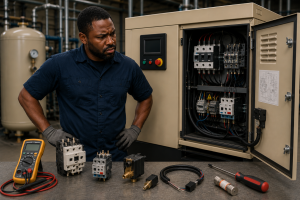
Reliable performance depends on properly maintained oil, air filters, oil filters, separators, dryers, drains, sensors, valves, and electrical components working together.
Neglecting routine maintenance can reduce efficiency, increase energy consumption, shorten equipment life, and lead to unexpected downtime.
Regular inspections and replacing wear components before they fail helps keep your compressed air system operating at peak performance while protecting your investment.
Frequently Asked Questions
How does an air compressor work?
An air compressor draws in atmospheric air, compresses it into a smaller volume to increase pressure, stores that energy, and releases it when needed to power tools, machinery, and industrial equipment.
Does an air compressor create air?
No. An air compressor doesn't create air. It simply compresses the surrounding atmospheric air to increase its pressure.
Why is compressed air considered stored energy?
When air is compressed, its molecules are packed closer together and naturally want to expand. Releasing that pressure creates usable mechanical force that can power equipment.
Why does compressed air contain water?
Atmospheric air naturally contains moisture. As compressed air cools after leaving the compressor, water vapor condenses into liquid water, which is why dryers and moisture separators are so important.
What is the difference between PSI and CFM?
PSI (pounds per square inch) measures air pressure, while CFM (cubic feet per minute) measures airflow. Most applications require both sufficient pressure and adequate airflow to operate correctly.
Why do factories use compressed air instead of electricity?
Compressed air is clean, versatile, relatively safe, and ideal for powering pneumatic equipment in environments where electric motors may not be practical. Many industrial processes also require precise pneumatic control that compressed air provides exceptionally well.
How long do industrial air compressors last?
With proper maintenance, many industrial rotary screw air compressors can operate reliably for 15 to 20 years or more. Regular maintenance and timely replacement of wear components play a significant role in maximizing service life.
Need replacement parts for your compressed air system?
Whether you're maintaining a rotary screw compressor or troubleshooting system performance, Edmac stocks OEM and high-quality aftermarket parts for many of the world's leading compressor manufacturers. From filters and separators to lubricants, dryers, electrical components, and maintenance kits, we help keep compressed air systems running reliably with fast shipping and expert support.