Why Won't My Compressor Start?
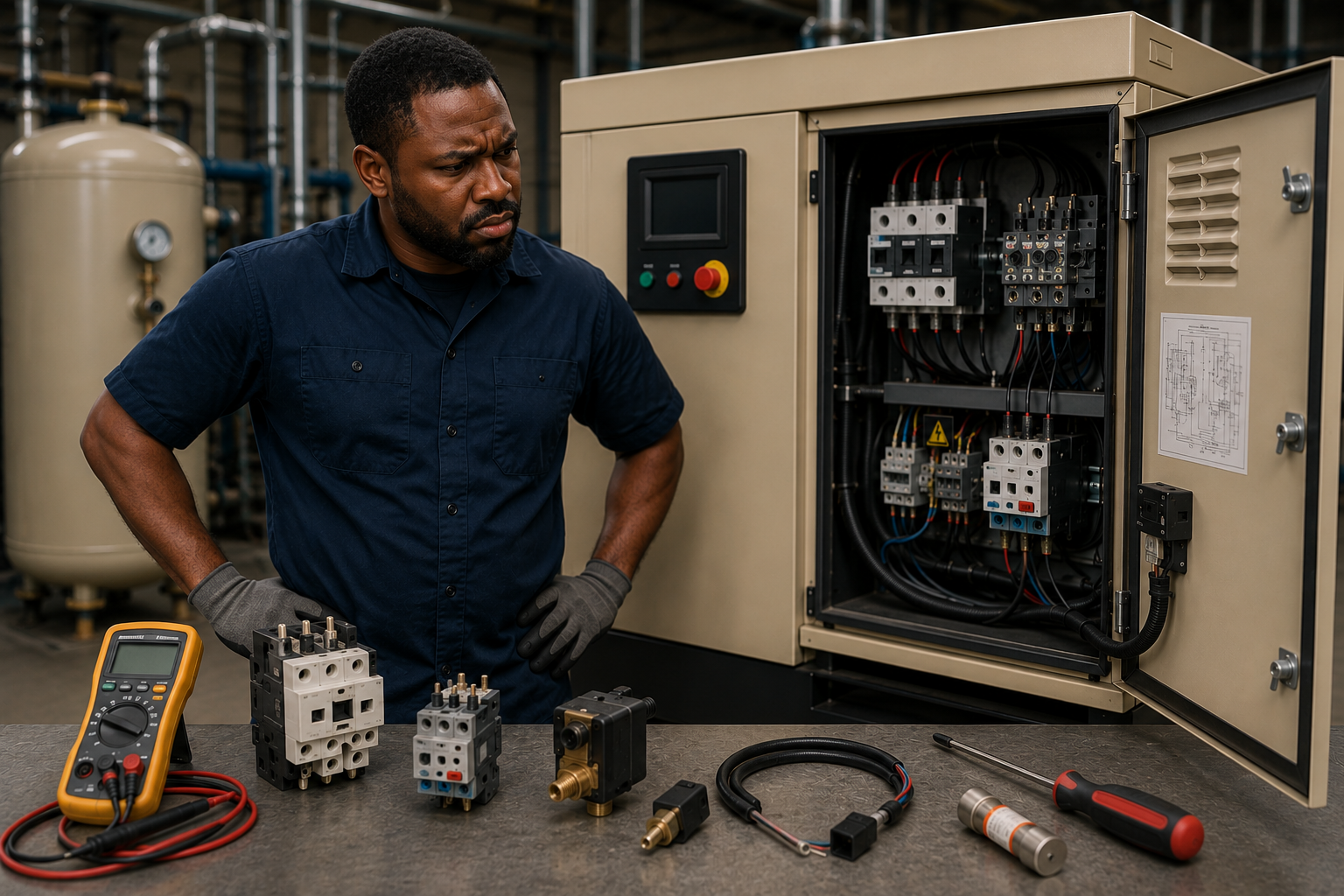
10 things to check first to get your air compressor started up and running.
Few equipment failures can disrupt a facility faster than an air compressor that refuses to start.
Whether your compressor supports a production line, powers pneumatic tools, or supplies air for critical processes, a no-start condition can quickly lead to lost productivity and costly downtime. It's easy to assume the worst, but in many cases, the problem is much simpler than a failed compressor.
Electrical protection devices, safety circuits, control components, and even basic maintenance issues can all prevent a compressor from starting. Many of these systems are designed to stop the machine before expensive damage occurs.
The key is approaching the problem methodically instead of replacing parts at random.
Before performing any inspection, follow your facility's lockout/tagout procedures and disconnect power whenever required. Compressed air systems store energy, and electrical troubleshooting should only be performed by qualified personnel.
Let's walk through ten of the most common reasons an air compressor won't start.
1. Verify That the Compressor Has Power
It may sound obvious, but always start with the basics.
If the controller is blank, indicator lights are off, or the compressor shows no signs of life, confirm that electrical power is actually reaching the machine.
Check the disconnect switch, incoming power supply, circuit breakers, and any facility disconnects that may have been opened during maintenance.
On three-phase systems, losing a single phase can prevent the motor from starting even though power appears to be available.
Beginning with the power supply can save a great deal of unnecessary troubleshooting.
2. Check for a Blown Fuse or Tripped Breaker
Fuses and circuit breakers are designed to protect the compressor from excessive current.
If one has opened, resist the temptation to simply reset it and move on. Protection devices almost always trip for a reason.
Possible causes include electrical shorts, overloaded motors, damaged wiring, failed contactors, or mechanical problems that increase motor current.
If a breaker repeatedly trips or a replacement fuse blows immediately, the underlying problem should be identified before restoring power.
3. Make Sure the Emergency Stop Isn't Engaged
Sometimes the simplest explanation is the correct one.
Many compressors are equipped with emergency stop buttons, safety interlocks, and protective shutdown circuits that prevent the machine from starting until they're reset.
An emergency stop button may have been pressed during maintenance or accidentally bumped during normal operation.
If your compressor has a controller, check for active alarms or messages before attempting another restart.
4. Inspect the Motor Overload Relay
Motor overload relays help protect electric motors from overheating and excessive current draw.
When an overload trips, the compressor may shut down immediately or refuse to restart until the condition has been corrected and the relay has been reset.
Repeated overload trips are usually symptoms rather than failures themselves.
Restricted cooling airflow, dirty coolers, low voltage, phase imbalance, excessive ambient temperatures, or mechanical drag can all cause a motor to work harder than intended.
If the overload trips repeatedly, it's worth investigating the root cause instead of simply resetting the relay.
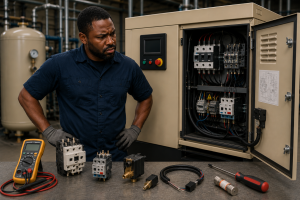
5. Check the Contactor
The contactor is responsible for delivering power to the motor when the compressor receives a start command.
Like any electrical component, contactors wear over time.
Burned contacts, weak coils, sticking mechanisms, or heat damage can prevent power from reaching the motor even though the controller is operating normally.
A failing contactor may buzz, chatter, click repeatedly, or show visible discoloration around the contacts.
Because contactors experience electrical arcing every time they operate, they're considered normal wear items on many industrial compressors.
6. Verify the Pressure Switch or Pressure Sensor
A compressor only starts when the control system determines that additional compressed air is needed.
Older compressors often rely on mechanical pressure switches, while modern systems typically use electronic pressure transducers connected to the controller.
If the switch or sensor isn't reporting system pressure accurately, the compressor may believe the receiver tank is already at the desired pressure and never issue a start command.
Loose wiring, damaged sensors, incorrect settings, or failed pressure switches can all create this condition.
7. Check Temperature Protection Devices
Modern compressors continuously monitor operating temperatures to protect expensive internal components.
Thermistors, temperature sensors, and thermal protection circuits help prevent damage caused by overheating.
If one of these devices detects excessive temperature—or if the sensor itself fails—the controller may prevent the compressor from starting until the issue has been resolved.
Don't assume a temperature fault automatically means the compressor overheated.
Sensor failures, damaged wiring, or poor electrical connections can produce similar symptoms.
8. Look for Signs of Overheating
If the compressor recently shut down on high temperature, it may intentionally delay restarting until temperatures return to a safe operating range.
High operating temperatures are commonly caused by dirty coolers, clogged filters, poor ventilation, incorrect lubricant, low oil levels, or excessive ambient temperatures.
Rather than repeatedly attempting to restart the compressor, inspect the cooling system and determine why temperatures increased in the first place.
Heat is one of the leading contributors to reduced lubricant life and premature component wear.
9. Inspect Wiring and Electrical Connections
Industrial environments are tough on electrical systems.
Years of vibration, heat cycles, dust, moisture, and routine maintenance can gradually loosen terminals or damage wiring.
Loose control wires, corroded terminals, damaged connectors, and worn cable insulation can interrupt communication between sensors, controllers, contactors, and safety devices.
A careful visual inspection often reveals discoloration, loose terminals, damaged insulation, or evidence of overheating.
10. Read the Fault Code Before Replacing Parts
One of the biggest mistakes people make is replacing components before understanding why the compressor stopped.
Modern controllers monitor dozens of operating conditions, including temperature, pressure, motor protection, sensors, electrical faults, and maintenance intervals.
If a fault code is displayed, treat it as valuable diagnostic information instead of an inconvenience.
Consult the manufacturer's documentation to understand what the code means before replacing components. A five-minute review of the fault history can often save hours of unnecessary troubleshooting.
When Is It Time to Call a Technician?
Some issues can be identified with a careful visual inspection. Checking for active alarms, verifying incoming power, confirming the emergency stop has been reset, or looking for obvious damage are reasonable first steps for trained facility personnel.
Once troubleshooting requires live voltage measurements, motor testing, control circuit diagnostics, or work inside energized electrical panels, it's time to involve a qualified technician.
Electrical systems are designed to protect both the equipment and the people working around it. If the compressor refuses to start, those protection systems may be doing exactly what they were designed to do.
Frequently Asked Questions
Why won't my air compressor start?
The most common causes include loss of electrical power, blown fuses, tripped breakers, overload relays, failed contactors, faulty pressure switches, temperature protection devices, damaged wiring, or active controller faults.
Why does my compressor click but not start?
A clicking sound often indicates the contactor or starter is attempting to engage but the motor is not receiving sufficient power or cannot rotate. Low voltage, worn contactors, overload trips, or mechanical problems are common causes.
Can a bad contactor keep a compressor from starting?
Yes. A failed contactor may prevent electrical power from reaching the motor even though the controller is calling for the compressor to start.
Can a pressure switch stop a compressor from starting?
Yes. If the pressure switch or pressure sensor incorrectly reports that system pressure is already at the desired level, the compressor may never receive a start command.
Should I keep resetting my compressor if it keeps tripping?
No. Repeated resets treat the symptom rather than the cause. If a compressor repeatedly trips protective devices or displays recurring faults, the underlying issue should be identified before returning it to service.
Keep Your Compressor Running Reliably
Electrical components don't last forever. Contactors wear with every start cycle. Fuses eventually fail. Sensors drift. Wiring loosens over time. Even well-maintained compressors require occasional replacement of normal wear components.
Whether you're replacing a failed contactor, troubleshooting a pressure switch, installing a new thermistor, or performing preventive maintenance, using the correct replacement parts helps restore reliable operation and minimize costly downtime.
Edmac stocks OEM and high-quality aftermarket electrical components for many of the world's leading air compressor manufacturers, including contactors, overload relays, fuses, pressure switches, thermistors, sensors, cables, and other critical control components to help keep your compressed air system running when you need it most.