What Does an Air/Oil Separator Do in an Air Compressor?
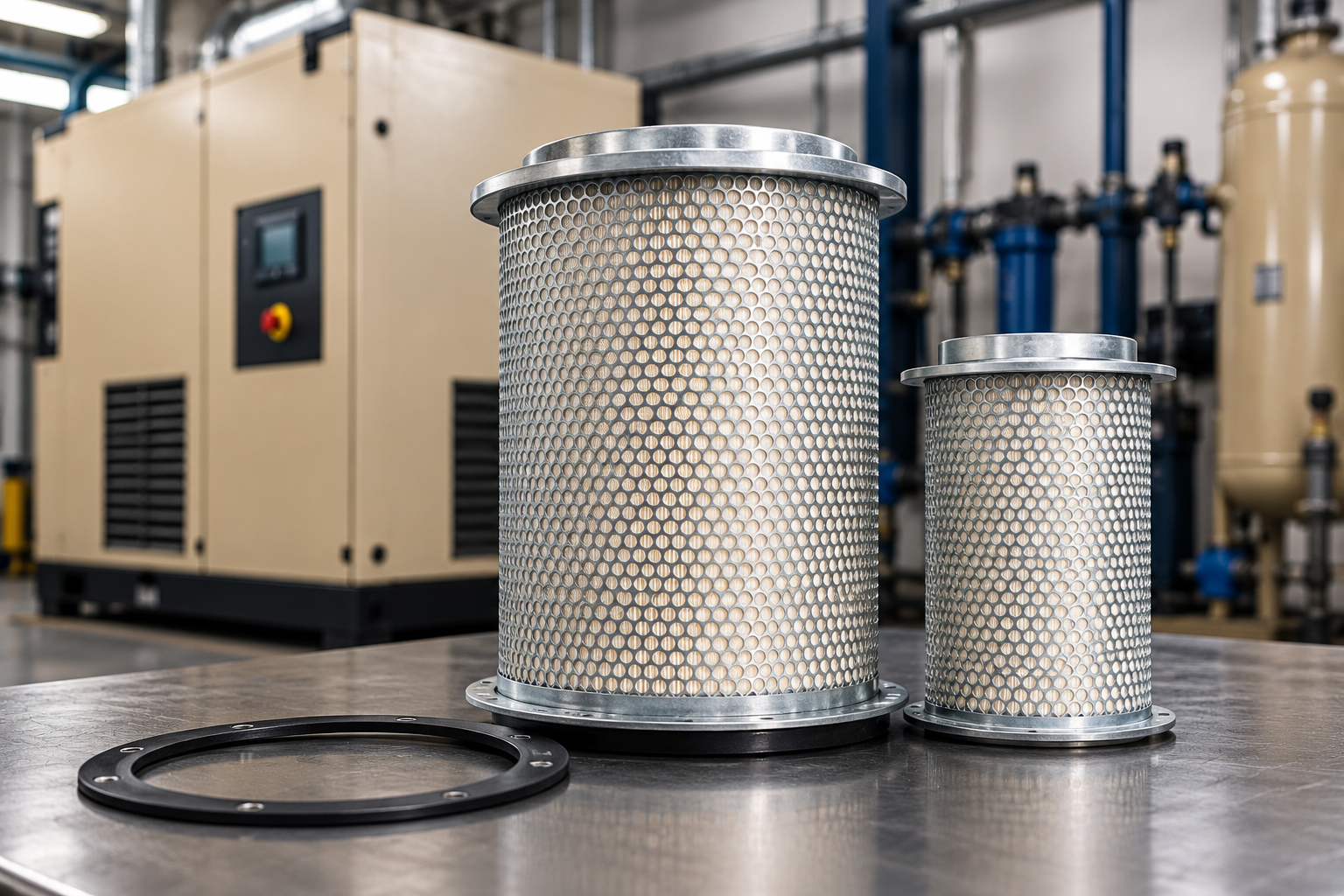
How air/oil separators protect your air compressor and reduce oil carryover.
An air/oil separator is an essential component in oil-injected rotary screw air compressors. While it may not receive as much attention as the air filter or oil filter, it plays a critical role in maintaining compressed air quality, minimizing lubricant consumption, and supporting efficient compressor operation.
During compression, oil is injected into the airend to lubricate moving components, absorb heat, and help seal internal clearances. However, this process also mixes oil with the compressed air. Before that air can leave the compressor and enter the downstream system, most of the oil must be removed.
That's where the air/oil separator comes in.
Understanding how air/oil separators work, the warning signs of a failing separator, and when replacement is necessary can help maintenance teams prevent unnecessary downtime and maintain reliable compressor performance.
How Does an Air/Oil Separator Work?
In an oil-injected rotary screw compressor, air and lubricant mix inside the compression chamber. Once compression is complete, the air-oil mixture travels into a separator vessel.
The separation process generally occurs in two stages.
Primary Separation
As the compressed air enters the separator vessel, its velocity and direction change. This allows much of the heavier oil to separate from the air and collect in the vessel.
The recovered lubricant can then circulate back through the compressor's lubrication system.
Secondary Separation
Although primary separation removes most of the lubricant, fine oil droplets and aerosols remain suspended in the compressed air.
The air passes through a specialized separator element containing filtration media designed to capture these remaining droplets.
As the small droplets collect and combine into larger droplets, they drain from the separator media and are returned to the lubrication system through a scavenge line.
The compressed air then continues through the compressor's discharge system with significantly less oil content.
This process allows the compressor to reuse its lubricant while minimizing the amount of oil carried into downstream equipment.
Why Are Air/Oil Separators Important?
Air/oil separators serve several important functions in oil-injected compressed air systems.
1. Reducing Oil Carryover
Oil carryover occurs when compressor lubricant passes into the downstream compressed air system.
Excessive oil carryover can contaminate piping, filters, air dryers, pneumatic equipment, and other components that rely on compressed air.
A properly functioning separator helps minimize oil carryover and maintain the compressed air quality expected from the compressor.
2. Reducing Lubricant Consumption
Compressor lubricant is designed to circulate repeatedly through the system.
When an air/oil separator fails to capture oil effectively, more lubricant can escape with the compressed air. This increases oil consumption and may require more frequent lubricant replacement or replenishment.
Effective oil separation helps retain lubricant within the compressor, reducing unnecessary operating costs.
3. Maintaining Compressor Efficiency
Compressed air must pass through the separator before leaving the compressor.
As a separator becomes contaminated or restricted, the pressure difference across the element can increase. This is commonly referred to as separator differential pressure.
Excessive differential pressure forces the compressor to work against additional resistance, potentially increasing energy consumption and reducing overall efficiency.
Maintaining a clean, properly functioning separator helps minimize unnecessary pressure losses.
4. Protecting Downstream Equipment
Oil contamination can create problems beyond the compressor itself.
Excessive lubricant entering the compressed air system may shorten the service life of downstream filtration components, contaminate air treatment equipment, and interfere with certain manufacturing processes.
While an air/oil separator does not replace downstream filtration or air treatment, it provides an important first step in controlling lubricant carryover.
What Are the Signs of a Failing Air/Oil Separator?
Air/oil separators are designed to operate for a specified service interval, but operating conditions can cause them to become restricted or lose effectiveness before their scheduled replacement.
Several warning signs may indicate that a separator requires inspection.
Excessive Oil Carryover
One of the most recognizable symptoms is an unusual amount of oil appearing in downstream compressed air equipment.
Oil accumulation in filters, piping, or other components may indicate that the separator is no longer removing lubricant effectively.
However, excessive oil carryover can also result from overfilled lubricant levels, scavenge line problems, incorrect operating conditions, or other compressor issues.
Increased Lubricant Consumption
If a compressor begins consuming more oil than normal without evidence of an external leak, the separator system may be allowing excessive lubricant to escape with the compressed air.
Monitoring lubricant consumption can help identify changes before they develop into more serious problems.
High Separator Differential Pressure
As contaminants accumulate within the separator media, airflow resistance can increase.
A rising pressure differential across the separator may indicate that the element is becoming restricted.
Excessive differential pressure can increase energy consumption and place additional demands on the compressor.
Higher Operating Temperatures
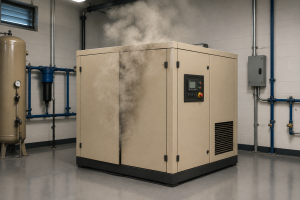
A severely restricted separator can contribute to increased operating temperatures, particularly when the compressor must work harder to maintain its required discharge pressure.
However, overheating can have several possible causes, including insufficient lubricant, dirty coolers, restricted filters, and inadequate ventilation.
For additional troubleshooting information, see our article, Why Is My Air Compressor Overheating?.
Reduced Compressor Performance
A restricted separator may contribute to reduced efficiency, increased power consumption, or difficulty maintaining expected system performance.
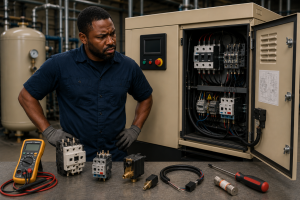
These symptoms are not exclusive to separator problems, so proper diagnosis is important before replacing components.
What Causes Air/Oil Separators to Fail Prematurely?
Although air/oil separators are routine maintenance components, several operating conditions can shorten their useful life.
Contaminated Compressor Lubricant
As lubricant ages, oxidation products, deposits, and other contaminants can accumulate within the compressor.
These materials may collect in the separator media and increase airflow resistance.
Excessive Operating Temperatures
High temperatures can accelerate lubricant degradation and contribute to varnish and deposit formation.
Over time, these deposits can restrict separator media and interfere with normal operation.
Incorrect Lubricant
Using lubricant that does not meet the compressor manufacturer's specifications can affect oil separation characteristics, deposit formation, and separator performance.
Moisture and Contamination
Operating conditions that allow excessive moisture or contaminants to accumulate in the lubrication system can negatively affect separator performance.
Extended Maintenance Intervals
Operating a separator beyond its recommended service life increases the likelihood of restriction, excessive pressure drop, and reduced separation performance.
Regular maintenance helps prevent these conditions from developing into more expensive compressor problems.
How Often Should an Air/Oil Separator Be Replaced?
There is no universal replacement interval that applies to every air compressor.
The appropriate service interval depends on several factors, including:
- Compressor manufacturer and model
- Operating hours
- Lubricant type and condition
- Ambient temperature
- Air quality and operating environment
- Separator differential pressure
- Manufacturer maintenance recommendations
Many industrial rotary screw compressors use scheduled separator replacement intervals measured in operating hours.
However, a separator operating in a particularly hot, dusty, or demanding environment may require attention sooner than one operating under more favorable conditions.
Maintenance teams should follow the compressor manufacturer's recommended service schedule and monitor operating conditions rather than relying on a single replacement interval for every machine.
Is an Air/Oil Separator the Same as an Oil Filter?
Although both components are involved in compressor lubricant management, they perform different functions.
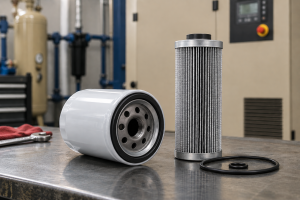
Oil Filter
An oil filter removes contaminants from the lubricant as it circulates through the compressor.
Its primary purpose is to protect internal components from dirt, wear particles, and other materials that can cause premature damage.
Air/Oil Separator
An air/oil separator removes lubricant droplets and aerosols from the compressed air after the compression process.
Its primary purpose is to minimize oil carryover while allowing recovered lubricant to return to the compressor.
Both components are essential to the operation of many oil-injected rotary screw compressors, but they are not interchangeable.
For more information about oil filtration, read our article, How Do Air Compressor Oil Filters Affect Equipment Uptime?.
Are OEM Air/Oil Separators Better Than Aftermarket Separators?
Both OEM and high-quality aftermarket air/oil separators can be appropriate replacement options when they meet the requirements of the compressor.
OEM separators are supplied or branded by the original equipment manufacturer and are intended for specific compressor applications.
Aftermarket separators are manufactured as replacement alternatives and may offer a cost-effective option for routine maintenance.
However, not all separators are interchangeable simply because they have similar dimensions or appearances.
Important considerations include:
- Compressor manufacturer and model compatibility
- Separator dimensions and construction
- Filtration and separation performance
- Airflow capacity
- Pressure differential characteristics
- Lubricant compatibility
- Sealing materials and operating conditions
A properly selected aftermarket separator should meet the application requirements of the compressor while providing reliable oil separation and acceptable pressure drop.
Edmac Compressor Parts offers OEM and aftermarket air/oil separators for a wide range of industrial air compressor makes and models, giving maintenance teams options based on equipment requirements, availability, and budget.
How Do You Choose the Correct Air/Oil Separator?
Selecting the correct replacement separator begins with identifying the compressor and its existing components.
Whenever possible, locate the original equipment manufacturer part number or the part number printed on the installed separator.
This information can help identify a compatible OEM or aftermarket replacement.
Before purchasing, verify:
- Compressor manufacturer and model
- Existing separator part number
- Required dimensions and configuration
- Operating pressure and temperature requirements
- Lubricant compatibility
- Separator design and sealing requirements
- Manufacturer maintenance specifications
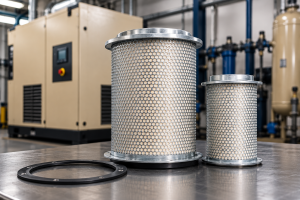
Air/oil separators are available in different configurations, including spin-on designs and internal separator elements.
Choosing the incorrect separator can lead to installation problems, inadequate oil separation, excessive pressure drop, or other operating issues.
Using an OEM part number to cross-reference a compatible replacement is often the most reliable starting point.
Frequently Asked Questions About Air/Oil Separators
What happens if an air/oil separator fails?
A failing separator may allow excessive lubricant into the compressed air system or create excessive pressure drop across the separator element. Depending on the failure, this can lead to increased oil consumption, reduced efficiency, higher operating costs, and potential problems with downstream equipment.
Can a bad air/oil separator cause an air compressor to overheat?
Yes. A severely restricted separator can increase pressure drop and place additional demands on the compressor, potentially contributing to elevated operating temperatures. However, overheating may also result from lubricant, cooling, ventilation, or other mechanical problems.
Can an air compressor operate without an air/oil separator?
Oil-injected rotary screw compressors depend on their oil separation systems to recover lubricant and limit oil carryover. Operating without the required separator is not appropriate and can lead to excessive oil discharge and other operating problems.
Do oil-free compressors need air/oil separators?
Oil-free compressors generally do not require the same air/oil separation process because lubricant is not intentionally injected into the compression chamber. However, many oil-free compressors still use lubricant in gearboxes or bearing assemblies and may require other types of oil filtration.
Are aftermarket air/oil separators reliable?
High-quality aftermarket separators can provide reliable performance when correctly matched to the compressor and manufactured to meet the application's requirements. Compatibility, construction quality, and separation performance should always be considered when selecting a replacement.
Where can I buy replacement air/oil separators?
Replacement air/oil separators are available through compressor manufacturers, authorized distributors, and specialized compressed air parts suppliers. Edmac Compressor Parts offers OEM and aftermarket separators for a wide range of industrial air compressor applications.
Keep Your Compressor Running Efficiently With the Right Air/Oil Separator
Air/oil separators play an important role in maintaining compressed air quality, controlling lubricant consumption, and supporting efficient compressor operation.
A properly functioning separator helps recover lubricant, minimize oil carryover, and reduce unnecessary pressure losses within the compressed air system.
Following recommended maintenance intervals, monitoring separator differential pressure, and selecting the correct replacement components can help prevent avoidable performance problems and costly downtime.
Edmac Compressor Parts offers a broad selection of OEM and aftermarket air/oil separators, along with air filters, oil filters, lubricants, maintenance kits, and thousands of replacement parts for major industrial air compressor brands.
Shop Air/Oil Separators at Edmac to explore replacement options for your equipment.