Air Receiver Tanks: What They Do, Benefits & Sizing
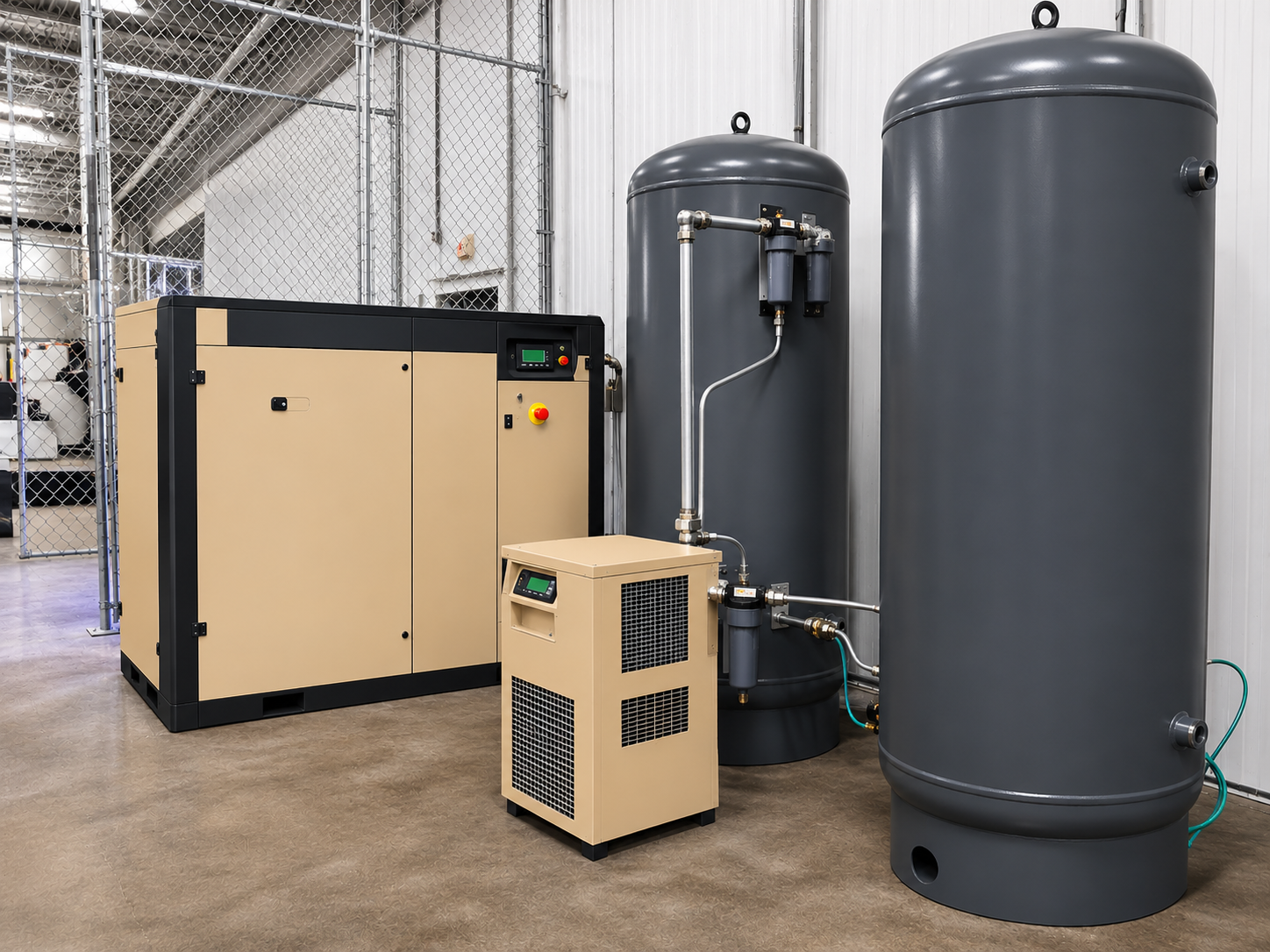
How air receiver tanks stabilize pressure and support reliable air systems.
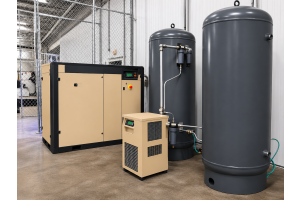
An air receiver tank is an important component of many industrial compressed air systems. While the air compressor generates compressed air, the receiver tank stores it temporarily, helping maintain stable system pressure and meet changing air demand.
Without adequate storage, compressed air systems may experience pressure fluctuations, excessive compressor cycling, and difficulty supplying equipment during periods of peak demand.
Air receiver tanks also support moisture management by allowing compressed air to cool and some of the water vapor to condense before the air reaches downstream equipment.
Understanding how air receiver tanks work, why they are important, and how to maintain them can help facilities improve compressed air system performance, reduce unnecessary energy consumption, and prevent costly downtime.
What Is an Air Receiver Tank?
An air receiver tank, also called a compressed air receiver or compressed air storage tank, is a pressure-rated vessel designed to store compressed air for use throughout a facility.
Most industrial air receivers are constructed from steel and are available in vertical or horizontal configurations. Tank capacity, pressure rating, and construction vary depending on the application.
The receiver tank is typically installed between the compressor and the equipment that uses compressed air, although its exact location depends on the system design.
Unlike the compressor, which generates compressed air, the receiver tank stores compressed air that has already been produced.
This stored air acts as a buffer between the compressor's output and the changing demands of the compressed air system.
How Does an Air Receiver Tank Work?
An air receiver tank stores compressed air under pressure and releases it when system demand exceeds the compressor's immediate output.
As the compressor operates, compressed air enters the receiver tank. When air production exceeds consumption, pressure within the tank increases.
When downstream equipment requires additional compressed air, stored air flows from the receiver into the distribution system.
This process helps reduce rapid pressure changes and allows the compressor and its controls to respond more effectively to changes in demand.
For example, a manufacturing facility may have several pneumatic tools operating intermittently. When multiple tools activate simultaneously, the sudden increase in demand can cause system pressure to drop.
A properly sized receiver tank provides temporary stored air to help support that demand while the compressor adjusts its output.
However, an air receiver tank does not increase the compressor's actual air production capacity. If demand consistently exceeds compressor output, additional storage alone will not correct the underlying capacity problem.
Why Are Air Receiver Tanks Important?
Air receiver tanks perform several functions that contribute to reliable and efficient compressed air system operation.
1. Stabilizing System Pressure
Compressed air demand rarely remains constant throughout the day.
Equipment starts and stops, production requirements change, and individual processes may require short bursts of compressed air.
These fluctuations can cause pressure changes throughout the system.
An air receiver tank helps stabilize pressure by providing a reserve of compressed air during temporary increases in demand.
More consistent pressure can improve the performance of pneumatic tools, valves, actuators, and other equipment that depends on a reliable air supply.
2. Reducing Compressor Cycling
Some air compressors start and stop or alternate between loaded and unloaded operation based on system pressure.
Without adequate storage, small changes in air demand may cause frequent cycling.
Excessive cycling can increase mechanical and electrical stress, depending on the compressor design and control system.
A properly sized receiver tank can help reduce cycling frequency by increasing the amount of stored air available between pressure-control settings.
This can support more stable compressor operation and help reduce unnecessary wear.
However, storage requirements differ between fixed-speed, load/unload, and variable-speed compressors. Receiver sizing should account for the compressor's specific control strategy.
3. Supporting Peak Air Demand
Certain manufacturing processes require large amounts of compressed air for relatively short periods.
Examples include pneumatic actuators, packaging equipment, and intermittent air-powered machinery.
These temporary demand spikes may exceed the compressor's immediate output even when average system demand remains within its capacity.
An appropriately sized receiver tank can supply stored air during these short periods, helping reduce pressure drops and maintain equipment performance.
For repeated or sustained high-demand applications, the compressor and distribution system must still have sufficient capacity to replenish the stored air.
4. Supporting Moisture Removal
Compressed air contains water vapor originating from the ambient air entering the compressor.
As compressed air cools, some of this moisture can condense into liquid water.
An air receiver tank can provide additional time and surface area for cooling, allowing some moisture to collect at the bottom of the vessel.
This accumulated condensate must be removed through a properly maintained drain.
While receiver tanks can assist with moisture separation, they do not replace refrigerated dryers, desiccant dryers, or downstream filtration.
For more information about moisture in compressed air systems, read our article, Why Is My Air Compressor Producing Water?
5. Improving Compressed Air System Efficiency
Air receiver tanks can contribute to system efficiency when properly integrated with compressor controls.
Adequate storage can reduce unnecessary cycling, support stable operating pressure, and help the system respond to temporary demand changes.
In some applications, improved storage and control strategies may allow facilities to operate with a narrower pressure range or reduce unnecessary compressor operation.
However, adding a larger receiver tank does not automatically reduce energy consumption.
The actual efficiency benefit depends on compressor type, control settings, air demand patterns, leakage, and overall system design.
What Is the Difference Between Wet and Dry Air Receiver Tanks?
Air receiver tanks are commonly described as wet receivers or dry receivers based on their location within the compressed air system.
Wet Air Receiver Tanks
A wet receiver is generally installed before the compressed air dryer.
Because the compressed air has not yet passed through the dryer, the tank may collect moisture as the air cools.
Wet receivers can provide storage close to the compressor and help accommodate fluctuations in compressor output.
Proper condensate drainage is particularly important because water can accumulate inside the vessel.
Dry Air Receiver Tanks
A dry receiver is installed after the compressed air dryer.
Because the air has already been treated to reduce moisture, the dry receiver stores air with a lower moisture content.
Dry receivers can help maintain pressure near downstream equipment and support applications with intermittent or rapidly changing demand.
Some compressed air systems use both wet and dry receivers to provide storage at different points in the system.
The appropriate configuration depends on air quality requirements, compressor controls, dryer capacity, and facility demand.
How Do You Size an Air Receiver Tank?
Air receiver tank sizing depends on several factors, including compressor capacity, operating pressure, control method, and the amount of stored air required.
Important considerations include:
- Compressor capacity, typically measured in cubic feet per minute (CFM)
- Minimum and maximum allowable system pressure
- Compressor control type
- Frequency and duration of peak demand
- Required pressure stability
- Available installation space
- Manufacturer recommendations
A common preliminary guideline for certain industrial systems is approximately 3–5 gallons of receiver capacity per CFM of compressor output.
For example, a 100 CFM compressor might use a receiver in the range of 300–500 gallons as an initial sizing estimate.
However, this is only a general starting point, not a universal sizing requirement.
Systems with significant intermittent demand, narrow pressure tolerances, or specific compressor control requirements may need substantially different storage capacity.
Proper sizing should be based on actual operating conditions and the compressor manufacturer's recommendations.
What Happens if an Air Receiver Tank Is Too Small?
An undersized air receiver tank may not provide sufficient storage to accommodate changes in compressed air demand.
Depending on the system, this can contribute to several operating problems.
Frequent Compressor Cycling
Insufficient storage can cause system pressure to change rapidly, resulting in more frequent compressor starts, stops, or load/unload cycles.
Pressure Fluctuations
When compressed air demand increases suddenly, a small receiver may not contain enough stored air to support the required pressure.
This can affect the operation of pneumatic equipment.
Reduced Ability to Handle Peak Demand
A receiver with insufficient capacity may be unable to support short periods of high air consumption.
Increased Equipment Stress
Frequent cycling and unstable operating conditions may place additional demands on compressors and associated control components.
These symptoms can also result from air leaks, incorrect pressure settings, restricted piping, or inadequate compressor capacity.
The entire compressed air system should be evaluated before determining that additional receiver capacity is necessary.
Can an Air Receiver Tank Be Too Large?
A larger receiver tank is not necessarily harmful, but excessive storage may provide little additional benefit relative to its cost and space requirements.
An oversized tank can increase initial system pressurization time and require additional installation space and maintenance.
In systems with poorly configured controls, additional storage may also affect how quickly the compressor responds to pressure changes.
The objective is not simply to install the largest available receiver.
It is to provide sufficient storage for the compressor's operating characteristics and the facility's actual air demand.
How Should an Air Receiver Tank Be Maintained?
Although air receiver tanks contain relatively few moving components, regular inspection and maintenance are essential.
Because these tanks operate under pressure, corrosion, damage, or malfunctioning safety components can create serious hazards.
Drain Accumulated Condensate
Water can collect inside receiver tanks as compressed air cools.
If this condensate is not removed, it may contribute to internal corrosion and reduce available storage volume.
Automatic drains can help remove accumulated water without requiring frequent manual intervention.
Drain operation should be checked regularly to ensure condensate is being removed without excessive compressed air loss.
Inspect for Corrosion and Damage
Inspect accessible exterior surfaces for rust, dents, damaged fittings, and signs of leakage.
Internal corrosion can also develop, particularly in systems where moisture accumulates.
Internal inspections should be performed by qualified personnel according to applicable requirements and manufacturer guidance.
Check Pressure Relief Devices
Air receiver tanks must have appropriate overpressure protection.
Pressure relief valves should be maintained and inspected according to applicable codes, regulations, and manufacturer instructions.
Never obstruct, bypass, or modify a pressure relief device.
Monitor Pressure and Connections
Inspect pressure gauges, connections, fittings, and associated piping for damage or leakage.
Unexpected pressure loss may indicate leaks or other problems within the compressed air system.
Follow Required Inspection Procedures
Air receivers are pressure vessels and may be subject to inspection, registration, and maintenance requirements depending on their location and application.
Follow the applicable pressure vessel codes, local regulations, and manufacturer instructions.
Never attempt to weld, modify, or repair a pressurized receiver without the required engineering evaluation and qualified personnel.
When Should an Air Receiver Tank Be Replaced?
Unlike filters and lubricants, air receiver tanks do not have a universal replacement interval based on compressor operating hours.
Their service life depends on factors such as construction, operating conditions, corrosion, maintenance, and inspection results.
Replacement or further evaluation may be necessary when a tank exhibits:
- Significant internal or external corrosion
- Structural damage or deformation
- Cracks or evidence of compromised welds
- Persistent leakage from the pressure vessel
- Failed inspections or unacceptable wall thickness
- Damage affecting the vessel's pressure rating or safe operation
A damaged or questionable receiver should be removed from service and evaluated by qualified personnel before continued operation.
Frequently Asked Questions About Air Receiver Tanks
Does every air compressor need an air receiver tank?
Not every compressor requires a separate receiver tank. Some compressors include integrated storage, while certain industrial systems are designed to operate without a conventional receiver. However, many compressed air systems benefit from properly sized storage to manage pressure fluctuations and intermittent demand.
Does an air receiver tank increase CFM?
No. An air receiver tank stores compressed air but does not increase the compressor's continuous CFM output. It can provide additional air for short periods, but the compressor must eventually replenish that storage.
Does a larger air receiver tank increase pressure?
No. A larger tank increases storage capacity, not the maximum pressure the compressor can produce. Operating pressure is determined by the compressor, controls, and system requirements. The tank must always be operated within its rated pressure limits.
How often should an air receiver tank be drained?
Drain frequency depends on moisture levels, operating conditions, and whether the tank uses an automatic drain. Tanks should be drained often enough to prevent significant condensate accumulation, following manufacturer guidance and site maintenance procedures.
Can an air receiver tank reduce compressor energy costs?
Yes, in some applications. Properly sized storage can improve compressor control performance, reduce unnecessary cycling, and support more stable pressure. Actual energy savings depend on the compressor and overall system configuration.
What is the difference between an air receiver tank and an air dryer?
An air receiver tank stores compressed air and helps stabilize pressure. An air dryer removes moisture from compressed air to achieve the required pressure dew point. These components serve different purposes and are often used together.
Where should an air receiver tank be installed?
An air receiver tank may be installed before or after the compressed air dryer, depending on system requirements. Wet receivers are generally installed before the dryer, while dry receivers are installed after it. Some systems use both.
Maintaining a Reliable Compressed Air System
Air receiver tanks play an important role in maintaining stable pressure, supporting peak demand, and improving the overall operation of compressed air systems.
However, receiver performance depends on more than tank capacity alone.
Proper compressor maintenance, effective moisture management, suitable pressure controls, and correctly sized system components all contribute to reliable operation.
At Edmac, we provide OEM and OEM-equivalent air compressor parts, lubricants, filtration products, and maintenance components to help keep compressed air systems operating efficiently.
Whether you're maintaining an existing compressor or evaluating replacement components, selecting the correct parts and following recommended maintenance procedures can help minimize downtime and reduce operating costs.
Explore air compressor parts and maintenance solutions at Edmac.com.