How Do Air Compressor Oil Filters Affect Equipment Uptime?
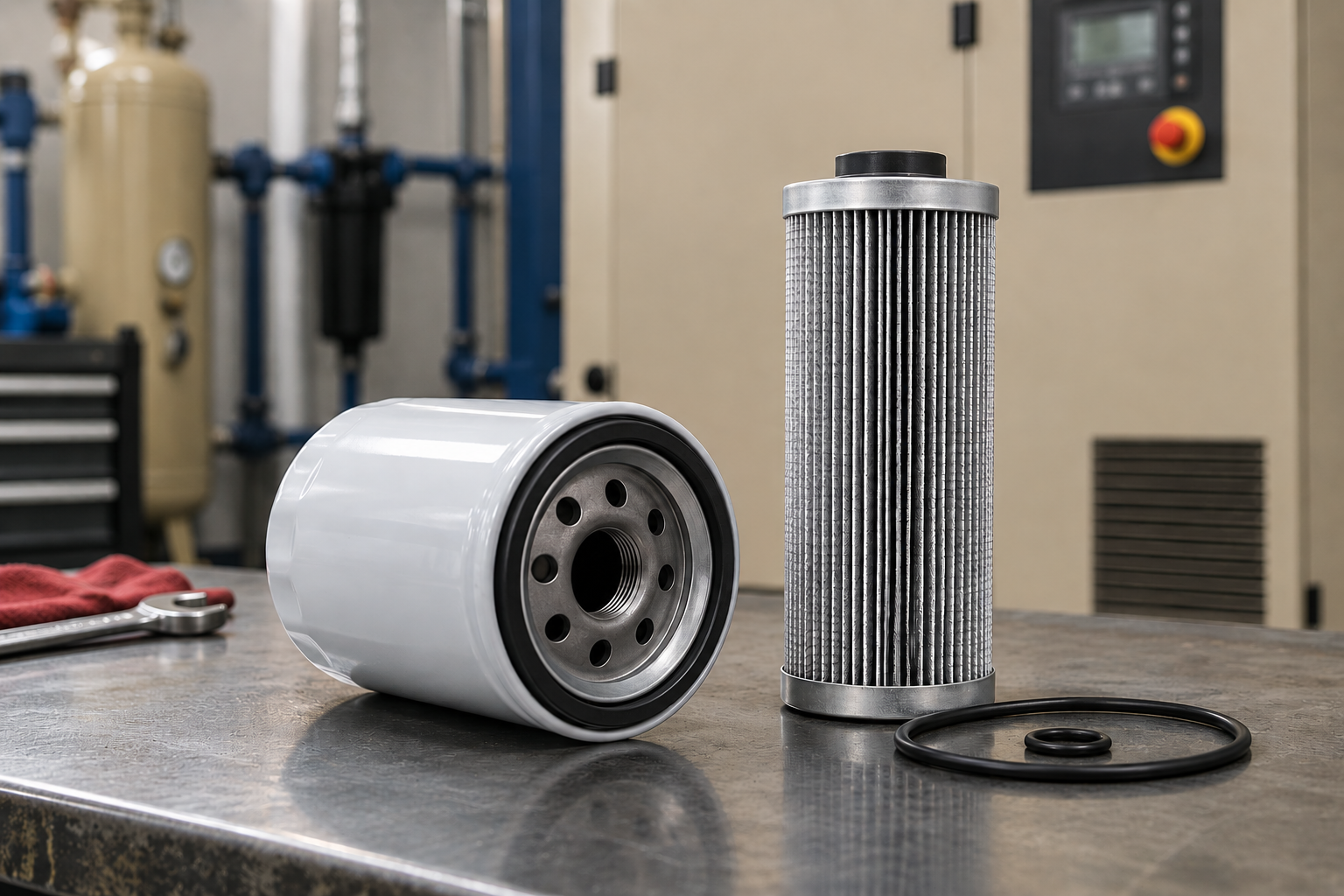
How the right oil filter protects your compressor and helps prevent costly downtime.
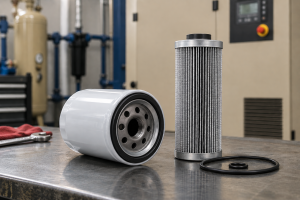
An air compressor oil filter may be a relatively small maintenance component, but it plays an important role in protecting the compressor and keeping it operating reliably.
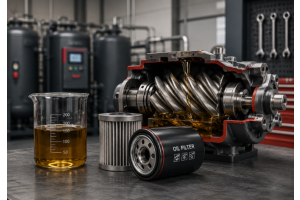
In oil-injected air compressors, lubricant continuously circulates through the system to lubricate moving components, help remove heat, and protect internal surfaces. As the oil circulates, the oil filter removes dirt, wear particles, deposits, and other contaminants before they can reach critical components.
A clogged, damaged, or poor-quality oil filter can restrict lubricant flow or allow contamination to circulate through the compressor. Over time, this can contribute to increased operating temperatures, premature component wear, reduced efficiency, and unexpected downtime.
Understanding how air compressor oil filters work, when they should be replaced, and how to select the right filter can help maintenance teams protect equipment and avoid unnecessary failures.
What Does an Air Compressor Oil Filter Do?
An air compressor oil filter removes contaminants from the lubricant circulating through the compressor.
During operation, compressor oil can pick up dirt, metal particles, oxidation products, and other contaminants. If those materials continue circulating through the lubrication system, they can accelerate wear on bearings, the airend, valves, and other internal components.
The oil filter captures these contaminants while allowing lubricant to continue flowing through the system.
A properly functioning oil filter helps:
- Maintain clean compressor lubricant
- Protect bearings and other moving components
- Reduce contamination-related wear
- Support proper lubricant circulation
- Maintain reliable compressor operation
- Extend the useful life of the lubricant and compressor components
Oil filtration is especially important in industrial compressors that operate for long periods or in demanding environments.
How Can an Oil Filter Affect Compressor Uptime?
Reliable lubrication is critical to compressor uptime.
When an oil filter becomes excessively restricted, lubricant flow through the compressor may be reduced. When a filter does not capture contaminants effectively, particles can continue circulating through the lubrication system.
Either condition can increase stress on compressor components.
Restricted oil flow can contribute to elevated operating temperatures and inadequate lubrication. Contaminated lubricant can accelerate wear and contribute to deposits on internal components.
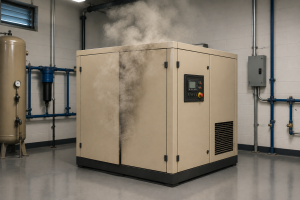
In severe cases, lubrication problems can result in high-temperature shutdowns, damaged bearings, airend problems, or other failures that take the compressor out of service.
For facilities that depend on compressed air for production, even a relatively inexpensive maintenance item such as an oil filter can have a significant effect on equipment reliability.
What Causes Air Compressor Oil Filters to Fail Prematurely?
Oil filters are designed to operate for a specified service interval, but operating conditions can sometimes cause them to become contaminated or restricted sooner than expected.
Common factors include:
Contaminated Operating Environments
Dusty or dirty environments can introduce additional contamination into the compressor system. Although the air intake filter provides the first line of defense against airborne contaminants, particles that enter the system can eventually affect the lubricant and oil filter.
Degraded Compressor Oil
Compressor lubricant is exposed to heat, pressure, moisture, and contaminants during operation. As lubricant ages, oxidation products and deposits can develop and increase the amount of material the oil filter must capture.
Excessive Operating Temperatures
High temperatures can accelerate lubricant oxidation and degradation. This can increase deposits within the lubrication system and shorten the useful life of the oil filter.
Incorrect Lubricant
Using a lubricant that does not meet the compressor manufacturer's specifications can affect lubrication performance and may contribute to deposits or other problems within the oil circuit.
Extended Maintenance Intervals
Running an oil filter beyond its recommended service interval increases the likelihood that it will become restricted. Maintenance intervals may also need to be shortened when compressors operate in particularly hot, dusty, humid, or demanding environments.
What Happens When an Air Compressor Oil Filter Becomes Clogged?
As contaminants accumulate in the filter media, resistance to lubricant flow can increase.
A severely restricted oil filter can interfere with proper oil circulation through the compressor. Depending on the compressor design, this may contribute to increased operating temperatures, reduced lubrication performance, or activation of a filter bypass mechanism.
A bypass valve can help maintain oil flow when differential pressure across the filter becomes too high, but bypassing the filter also means lubricant may circulate without normal filtration.
That is why an oil filter should not simply be judged by whether the compressor is still running.
Following the recommended maintenance interval helps prevent the filter from reaching a condition where restriction begins affecting compressor performance.
Why Do Industrial Air Compressors Need High-Quality Oil Filters?
Industrial air compressors may operate for thousands of hours each year, often supporting equipment or production processes where unplanned downtime is expensive.
The oil filter must maintain adequate lubricant flow while capturing contaminants throughout its intended service interval.
Filter construction, filtration efficiency, pressure capability, bypass-valve design, sealing materials, and compatibility with the compressor lubricant can all affect performance.
This becomes particularly important in applications with long operating hours, high ambient temperatures, heavy contamination, or critical compressed-air requirements.
The correct oil filter should always meet the specifications required for the compressor and its operating conditions.
Are OEM Oil Filters Better Than Aftermarket Oil Filters?
Both OEM and high-quality aftermarket oil filters can be appropriate options when they meet the requirements of the compressor.
OEM filters are supplied or branded by the original equipment manufacturer and are designed for specific compressor applications.
Aftermarket filters are produced as replacement alternatives. A properly selected aftermarket filter should provide the correct fit and meet the performance requirements of the application.
The important consideration is not simply whether the filter carries an OEM or aftermarket label. Maintenance teams should verify compatibility, filtration performance, construction quality, and application requirements before installing a replacement filter.
For critical equipment, selecting filters from a knowledgeable compressed-air parts supplier can also help reduce the risk of installing an incorrect replacement.
Edmac offers both OEM and aftermarket compressor oil filters, allowing customers to select the option that best fits their equipment, maintenance strategy, and operating requirements. Edmac's current online catalog includes hundreds of oil-filter options for industrial compressor applications.
How Do You Choose the Correct Air Compressor Oil Filter?
Start with the compressor manufacturer, model, and existing oil-filter part number whenever possible.
Oil filters that look similar externally are not necessarily interchangeable. Differences can include thread size, dimensions, filtration media, flow capacity, pressure rating, bypass-valve settings, and sealing materials.
When selecting a replacement oil filter, verify:
- Compressor manufacturer and model
- Existing OEM or replacement part number
- Filter dimensions and connection type
- Required filtration performance
- Lubricant compatibility
- Operating pressure and temperature requirements
- Recommended service interval
- Using an OEM part number to cross-reference a compatible replacement is often the easiest way to identify the correct filter.
Edmac supplies OEM and aftermarket oil filters for a wide range of industrial compressor systems and currently lists hundreds of options through its air compressor oil-filter catalog.
What Should Facilities Consider When Purchasing Oil Filters in Bulk?
Facilities operating multiple air compressors can benefit from standardizing their preventive-maintenance purchasing.
Instead of sourcing individual filters only when service is due, maintenance teams can identify the filters required across their compressor fleet and maintain appropriate inventory for scheduled maintenance.
When purchasing compressor oil filters in larger quantities, consider:
- The number and types of compressors in the facility
- OEM and model compatibility
- Normal service intervals
- Annual filter consumption
- Storage requirements
- Planned maintenance schedules
- Critical spare requirements
- OEM versus aftermarket preferences
Keeping commonly used filters available can reduce delays during scheduled maintenance and help prevent an inexpensive consumable from extending compressor downtime.
For facilities with multiple compressor brands or locations, working with a supplier that carries both OEM and aftermarket parts can also simplify purchasing and reduce the number of vendors needed to support the compressor fleet.
Frequently Asked Questions About Air Compressor Oil Filters
How often should an air compressor oil filter be changed?
Oil-filter replacement intervals vary by compressor manufacturer, model, lubricant, operating hours, and environment. Follow the manufacturer's recommended service interval and consider more frequent replacement when the compressor operates in unusually hot, dusty, humid, or demanding conditions.
Can a clogged oil filter cause an air compressor to overheat?
Yes. A severely restricted oil filter can interfere with normal lubricant circulation. Because compressor oil helps remove heat as well as lubricate components, inadequate oil flow can contribute to elevated operating temperatures. Your previous overheating article already establishes this relationship, making it a strong internal-link opportunity.
Can the wrong oil filter damage an air compressor?
Potentially. An incorrect filter may have the wrong dimensions, flow characteristics, filtration performance, bypass setting, pressure capability, or sealing configuration. Always verify that the replacement filter is designed for the specific compressor application.
Are aftermarket air compressor oil filters reliable?
High-quality aftermarket oil filters can provide a reliable alternative to OEM filters when they are correctly matched to the compressor and meet the application's performance requirements. Edmac offers both OEM and aftermarket options across its current oil-filter catalog.
Where can I buy air compressor oil filters?
Air compressor oil filters are available through compressor manufacturers, authorized distributors, and specialized compressed-air parts suppliers. Edmac Compressor Parts supplies OEM and aftermarket oil filters for a wide range of industrial compressor systems, along with air filters, air/oil separators, lubricants, maintenance kits, and other compressor service parts.
Keep Your Compressor Protected With the Right Oil Filter
Oil filtration is an important part of maintaining a reliable industrial air compressor.
Replacing oil filters at the appropriate service interval helps keep contaminants out of the lubrication system, maintain proper oil circulation, protect critical components, and reduce the risk of maintenance-related downtime.
The correct filter depends on the compressor, operating environment, lubricant, and maintenance requirements, so replacement filters should always be selected according to the specifications of the equipment.
Edmac Compressor Parts offers hundreds of OEM and aftermarket air compressor oil filters, along with air filters, air/oil separators, lubricants, maintenance kits, and thousands of replacement parts for major air compressor brands. Shop Edmac's air compressor oil filters to find the right option for your equipment.