How Often Should You Service an Air Compressor?
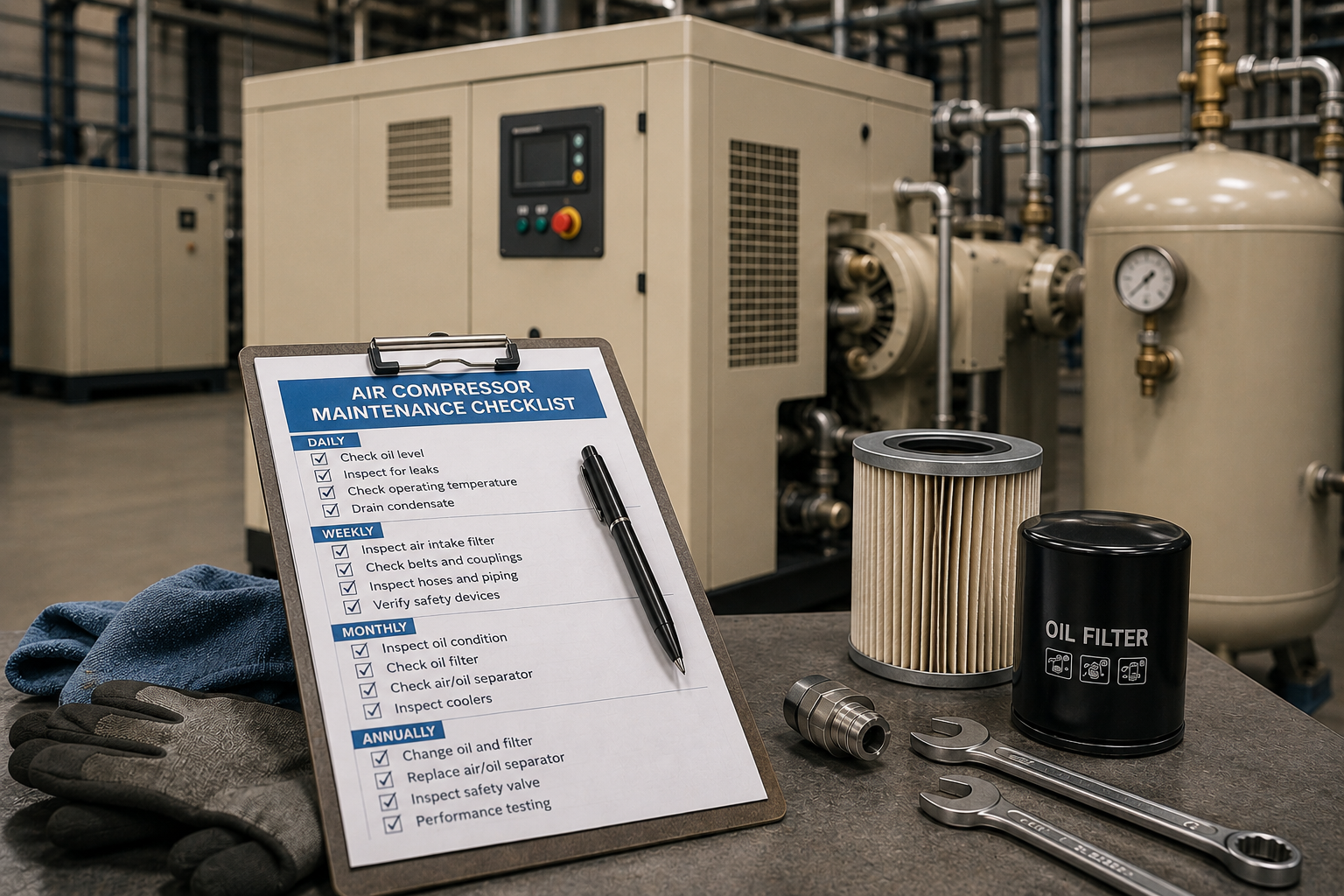
A complete maintenance checklist to keep your air compressor running smoothly.
An industrial air compressor is one of the hardest working pieces of equipment in any facility. Whether it's powering production lines, operating pneumatic tools, controlling automated machinery, or supporting critical manufacturing processes, your compressor often runs for thousands of hours each year.
Like any machine with moving parts, however, an air compressor requires routine maintenance to operate efficiently and reliably. Neglecting maintenance doesn't just increase the risk of unexpected breakdowns. It can also reduce energy efficiency, shorten equipment life, increase operating costs, and create expensive production downtime.
The good news is that most compressor failures don't happen without warning. A consistent preventive maintenance program can catch small issues before they become major repairs.
If you're new to compressed air systems, start by reading our guide, "How Does an Air Compressor Work?" Understanding how a compressor functions makes it much easier to understand why routine maintenance is so important.
Here's what every facility should know about keeping an industrial air compressor running at peak performance.
Why Preventive Maintenance Matters
Many people think maintenance is simply about preventing equipment failure.
That's certainly one benefit, but it's far from the only one.
A well-maintained compressor typically:
- Uses less electricity
- Produces cleaner compressed air
- Runs cooler
- Lasts significantly longer
- Requires fewer emergency repairs
- Maintains more consistent system pressure
In fact, energy consumption represents the largest operating cost of most industrial air compressors. Even a partially clogged air filter or oil separator can force the compressor to work harder, increasing electricity usage while reducing overall performance.
Routine maintenance helps protect both your equipment and your operating budget.
Daily Air Compressor Maintenance Checklist
Most daily inspections take less than ten minutes but can prevent costly downtime.
Check Oil Level
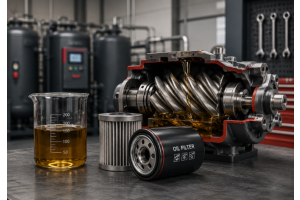
Oil-lubricated compressors depend on clean lubricant to cool internal components, reduce friction, and protect bearings and rotors from wear.
If oil levels are low, top off using the manufacturer-recommended compressor lubricant.
If the oil appears unusually dark, cloudy, or contaminated, it may be time for an oil change.
For more information about compressor lubricants, read What Does Oil Do in an Air Compressor?
Listen for Unusual Noises
Experienced operators often recognize problems before instruments do.
Grinding...
Whining...
Knocking...
Excessive vibration...
Changes in normal operating sounds can indicate bearing wear, loose components, belt issues, or internal damage.
Look for Leaks
Walk around the compressor while it's operating.
Look for:
- Oil leaks
- Air leaks
- Water leaks
Even a small compressed air leak can waste a surprising amount of energy over time.
Check Operating Temperature
Every compressor has a normal operating temperature.
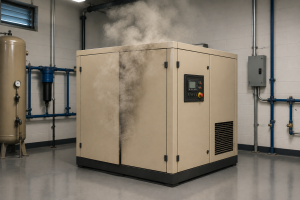
If temperatures begin climbing higher than usual, investigate before the compressor overheats.
Dirty coolers, restricted airflow, low oil levels, and clogged filters are common causes.
Drain Condensate
Compressed air naturally contains moisture.
If condensate isn't removed regularly, water can accumulate inside tanks and piping, leading to corrosion, contamination, and equipment damage.
Many systems use automatic drains, but they should still be inspected to verify they're functioning correctly.
Weekly Air Compressor Maintenance Checklist
Weekly inspections take a closer look at components that don't typically change from day to day.
Inspect the Air Intake Filter
A dirty intake filter restricts airflow.
That forces the compressor to work harder while reducing efficiency.
Replace dirty filters before they significantly impact performance.
Check Belts and Couplings
If your compressor uses belt drive components, inspect them for:
- Cracks
- Fraying
- Excessive wear
- Proper tension
Loose belts reduce efficiency while worn belts may eventually fail completely.
Inspect Hoses and Piping
Look for:
- Loose fittings
- Damaged hoses
- Corrosion
- Vibration damage
Fixing a minor leak today can prevent significant energy losses tomorrow.
Verify Safety Devices
Pressure relief valves, emergency stops, and safety shutdowns should be inspected regularly to ensure they function properly.
Safety equipment should never be bypassed or ignored.
Monthly Air Compressor Maintenance Checklist
Monthly maintenance focuses on system performance.
Inspect Compressor Oil
Even if the oil doesn't require replacement yet, inspect its condition.
Milky oil may indicate water contamination.
Dark or burnt oil may suggest overheating.
Dirty oil accelerates internal wear.
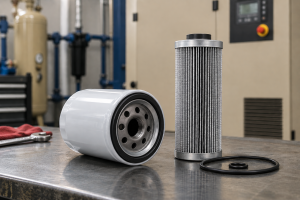
Inspect the Oil Filter
The oil filter removes contaminants before they circulate through the compressor.
A restricted oil filter can reduce lubrication and increase internal wear.
Replace filters according to manufacturer recommendations or differential pressure indicators.
Inspect the Air/Oil Separator
Rotary screw compressors rely on separators to remove oil from compressed air.
As separators become clogged, pressure drop increases.
Common symptoms include:
- Reduced efficiency
- Higher operating temperatures
- Increased oil carryover
- Higher energy consumption
Inspect Coolers
Dust and debris can reduce cooler performance.
Use low-pressure compressed air or appropriate cleaning methods to remove buildup from cooler fins.
Improved cooling extends compressor life.
Quarterly Maintenance
Every few months, perform a more comprehensive inspection.
Check:
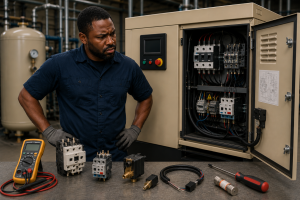
- Electrical connections
- Motor mounting bolts
- Vibration isolators
- Cooling fans
- Flexible couplings
- Pressure switches
- Sensors
Loose electrical connections can generate heat while vibration gradually loosens hardware throughout the machine.
Annual Air Compressor Maintenance
Annual service often includes replacing major wear components.
Typical annual maintenance includes:
- Compressor oil
- Oil filter
- Air filter
- Air/oil separator
- Safety valve inspection
- Cooler cleaning
- Motor inspection
- Performance testing
- Leak survey
- System calibration
Many facilities schedule annual maintenance during planned shutdowns to minimize production interruptions.
Signs Your Air Compressor Needs Service
Even with preventive maintenance, compressors eventually show signs that service is needed.
Watch for:
- Rising Energy Costs
If electricity usage increases without increased production, compressor efficiency may be declining.
- Excessive Moisture
Water in airlines or downstream equipment often indicates problems with dryers, drains, or cooling systems.
Our guide, "Why Is My Air Compressor Producing Water?", explains the causes in greater detail.
- Oil Carryover
Oil appearing in downstream equipment may indicate separator problems or excessive internal wear.
- Pressure Loss
If the compressor struggles to maintain pressure, inspect filters, leaks, valves, and compressor performance.
- High Operating Temperatures
Persistent overheating should never be ignored.
Heat accelerates lubricant breakdown and shortens equipment life.
- Unusual Vibration
Increased vibration can indicate worn bearings, coupling issues, loose hardware, or alignment problems.
Common Air Compressor Maintenance Mistakes
Many compressor failures result from preventable maintenance errors.
Some of the most common include:
Ignoring small air leaks that gradually increase energy costs.
Using the wrong compressor lubricant.
Waiting until filters become completely clogged.
Skipping oil changes because the compressor "still runs."
Neglecting condensate drains.
Using non-approved replacement parts without verifying compatibility.
Waiting until a component fails instead of replacing normal wear items during scheduled maintenance.
Preventive maintenance almost always costs less than emergency repairs.
Build a Preventive Maintenance Schedule
Every compressor installation is different.
A compressor running eight hours per week has very different maintenance needs than one operating around the clock in a manufacturing plant.
Always follow the service intervals recommended by the equipment manufacturer while adjusting maintenance frequency based on operating hours, environmental conditions, and system demand.
Keeping detailed maintenance records also helps identify recurring issues before they become expensive failures.
Frequently Asked Questions
- How often should an air compressor be serviced?
Daily visual inspections are recommended, while more detailed maintenance should be performed weekly, monthly, quarterly, and annually according to the manufacturer's maintenance schedule.
- How often should compressor oil be changed?
Service intervals vary by compressor model, operating conditions, and lubricant type. Always follow the manufacturer's recommendations, but inspect oil regularly for contamination or degradation.
- What happens if I don't maintain my air compressor?
Poor maintenance can reduce efficiency, increase electricity costs, shorten equipment life, contaminate compressed air, and lead to expensive downtime.
- How often should air filters be replaced?
Replace intake filters whenever they become restricted or according to the manufacturer's recommended maintenance interval. Dirty filters reduce airflow and force the compressor to work harder.
- How long do air/oil separators last?
Most separators are replaced based on operating hours or differential pressure. A clogged separator reduces efficiency and can increase oil carryover into the compressed air system.
- Is preventive maintenance really worth it?
Absolutely. Preventive maintenance is almost always less expensive than emergency repairs. It also improves energy efficiency, extends equipment life, reduces downtime, and helps ensure consistent compressed air quality.
Keep Your Compressor Running at Peak Performance
Preventive maintenance is one of the smartest investments you can make in your compressed air system. A few minutes spent inspecting filters, checking oil, draining condensate, or replacing normal wear components can prevent hours or even days of costly downtime.
Whether you're performing routine maintenance or planning a major service, Edmac offers OEM and high-quality aftermarket filters, separators, lubricants, maintenance kits, electrical components, and thousands of replacement parts for many of the world's leading air compressor manufacturers.
Keep your compressor running efficiently, reduce unexpected downtime, and get the most from your investment with the right parts and the right maintenance schedule.