What Does Oil Do in an Air Compressor?
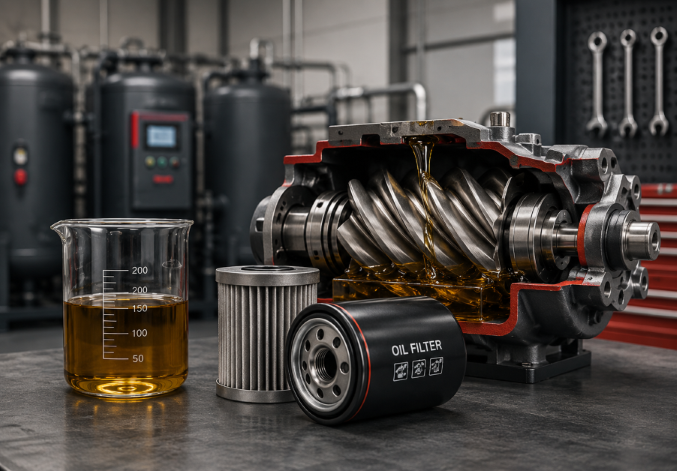
Learn how compressor oil cools, seals, and protects your compressor system too.
Oil plays a critical role in the operation and reliability of many compressed air systems. While most people understand that oil lubricates moving parts, its function inside an air compressor goes far beyond simple lubrication. In oil-flooded compressors, oil helps cool the compression process, create an effective seal, reduce wear, and extend equipment life. Even oil-free compressors rely on oil in certain components to ensure efficient operation.
Understanding the role of oil can help compressor owners make informed maintenance decisions, identify potential problems, and maximize the life of their equipment.
The Role of Oil in Oil-Flooded Air Compressors
Oil-flooded rotary screw compressors are among the most common types of industrial air compressors used today. These machines intentionally inject oil into the compression chamber during operation.
This may seem counterintuitive at first. After all, many compressed air applications require clean air. However, the oil serves several important functions that make the compressor more efficient and reliable.
Lubrication
The most obvious purpose of compressor oil is lubrication.
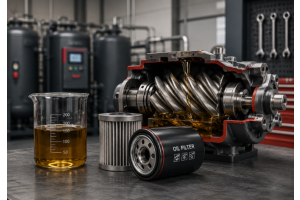
Inside a rotary screw compressor, two intermeshing rotors spin at high speed to compress air. Bearings, gears, and other moving components are subjected to significant mechanical loads during operation.
Without proper lubrication, metal surfaces would create excessive friction, leading to heat buildup, premature wear, and eventual component failure.
Compressor oil forms a protective film between moving surfaces, reducing direct metal-to-metal contact and helping critical components operate smoothly.
Cooling
Compression naturally generates heat.
As air is compressed into a smaller volume, its temperature rises significantly. In an oil-flooded compressor, oil is injected directly into the compression chamber where it absorbs a large portion of this heat.
The heated oil is then routed through an oil cooler before being recirculated back into the system.
This cooling effect helps maintain operating temperatures within acceptable limits and prevents excessive thermal stress on internal components.
Without oil, the temperature inside the compression chamber would be substantially higher, reducing efficiency and increasing wear.
Sealing
Oil also acts as a sealant during the compression process.
Rotary screw compressors rely on very tight clearances between the rotors and housing. Even with precision manufacturing, small gaps exist between components.
The injected oil fills these microscopic spaces and helps prevent compressed air from leaking backward through the compression chamber.
This improved sealing increases volumetric efficiency and allows the compressor to produce more compressed air with less energy.
Contaminant Removal
Oil helps carry contaminants away from critical components.
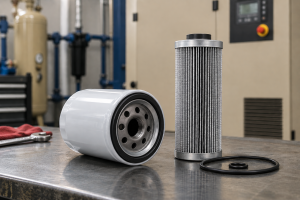
Dust, microscopic particles, and wear debris can accumulate within a compressor over time. As oil circulates through the system, it captures many of these contaminants and transports them to the oil filter where they can be removed.
This helps keep internal components cleaner and reduces abrasive wear.
What Happens to the Oil After Compression?
Many people assume that oil injected into the compression chamber simply leaves with the compressed air. In reality, modern oil-flooded compressors use sophisticated separation systems to recover and reuse the oil.
After the air-oil mixture leaves the airend, it enters a separator vessel where the majority of the oil is removed.
The remaining oil aerosol is captured by an air/oil separator element, which further reduces oil carryover before the compressed air exits the compressor.
The recovered oil is then cooled, filtered, and returned to the compression process.
This closed-loop design allows the compressor to continuously benefit from oil injection while minimizing oil contamination in the compressed air stream.
Why Compressor Oil Is Different from Motor Oil
Not all oils are created equal.
Compressor lubricants are specifically engineered to withstand the unique conditions found inside compressed air systems. They must resist oxidation, handle elevated temperatures, separate moisture effectively, and maintain stable viscosity over long operating periods.
Using the wrong lubricant can lead to increased deposits, shortened oil life, reduced efficiency, and potentially costly compressor damage.
For this reason, compressor manufacturers typically recommend specific lubricant formulations designed for their equipment.
Signs of Oil-Related Problems
Because oil performs so many critical functions, oil-related issues can quickly affect compressor performance.
Some common warning signs include:
- Elevated operating temperatures
- Increased oil consumption
- Excessive oil carryover
- Reduced air output
- Unusual bearing or gear noise
- Frequent high-temperature shutdowns
- Darkened or degraded oil
Regular oil analysis, filter changes, and scheduled maintenance can help identify problems before they become major repairs.
What About Oil-Free Compressors?
One of the biggest misconceptions in the compressed air industry is that oil-free compressors contain no oil whatsoever.
While oil-free compressors do not inject oil into the compression chamber, many designs still rely on oil elsewhere within the machine.
The term "oil-free" refers specifically to the compressed air path. It means oil is not intentionally introduced into the air stream during compression.
This distinction is important.
Oil-Free Compression Chambers
In oil-free rotary screw compressors, the rotors do not rely on injected oil for cooling, sealing, or lubrication.
Instead, these compressors use specialized coatings, precision manufacturing, and timing gears to keep the rotors synchronized without contacting each other.
Because oil is not present in the compression chamber, the resulting compressed air can meet stringent air quality requirements for industries such as:
- Food and beverage processing
- Pharmaceutical manufacturing
- Electronics production
- Medical facilities
- Laboratory applications
However, eliminating oil from the compression process introduces new engineering challenges.
Without oil's cooling effect, oil-free compressors often operate at higher temperatures and may require additional cooling stages to maintain efficiency.
Did You Know? Oil-Free Compressors Still Use Oil
Here's a fact that surprises many compressor owners:
Most oil-free rotary screw compressors still contain oil.
The difference is that the oil is isolated from the air compression chamber.
In many oil-free designs, oil is used to lubricate bearings and timing gears located within dedicated gearbox compartments. These components require lubrication just like those found in oil-flooded machines.
The oil remains separated from the compressed air path and never enters the compression chamber itself.
As a result, oil changes, oil filters, and lubricant maintenance may still be required even on compressors marketed as "oil-free."
This is one reason why maintenance manuals remain important regardless of compressor type. Assuming an oil-free compressor requires no lubricant maintenance can lead to unexpected failures and costly downtime.
The Importance of Proper Oil Maintenance
Whether your compressor is oil-flooded or oil-free, proper lubricant management remains essential.
Regular maintenance should include:
- Monitoring oil levels
- Following recommended oil change intervals
- Replacing oil filters as scheduled
- Inspecting for leaks
- Monitoring operating temperatures
- Using manufacturer-approved lubricants
Neglecting lubrication can lead to increased wear, reduced efficiency, and shortened equipment life.
In many cases, the cost of routine oil maintenance is insignificant compared to the cost of replacing major components such as bearings, gears, or airends.
Final Thoughts
Oil is one of the most important fluids in any compressed air system. In oil-flooded compressors, it serves multiple functions including lubrication, cooling, sealing, and contaminant removal. These capabilities help improve efficiency, protect critical components, and extend equipment life.
Even oil-free compressors often depend on lubricants in their gearboxes and bearing assemblies, despite keeping oil completely out of the compression chamber and air stream.
Understanding the role of oil can help operators make better maintenance decisions, improve reliability, and maximize the performance of their compressed air equipment. Whether you're operating an oil-flooded rotary screw compressor or an oil-free system designed for critical applications, proper lubricant management remains a key part of long-term compressor health.
Frequently Asked Questions
Why does a rotary screw compressor need oil?
Oil lubricates bearings, cools the compression chamber, seals rotor clearances, and helps separate contaminants.
Can an air compressor run without oil?
Some oil-free compressors can, but oil-flooded rotary screw compressors depend on oil for proper operation.
What happens if compressor oil is not changed?
Old oil can cause overheating, reduced efficiency, increased wear, and premature component failure.